Nosferatu: A Symphony of Horror (1922)

Note: This was part of what was intended to be about a book-length write-up of all major Dracula movies/shows/media that I made fair progress on before getting sidetracked by real-world horrors.  Still, I was always very happy with this write-up of the original Nosferatu, and on the eve of Robert Eggers’s new remake, I thought it would be an appropriate time to share it with the world. And no, unfortunately I never made much headway on writing up the Herzog version(s), so don’t look for those. Enjoy!

By Jonathan Morris

There is always a clear dilemma in writing about a film that has been analyzed to death, and then to undeath, and then back to death. Nosferatu: A Symphony of Horror has been the subject of books, doctoral theses, articles, essays, YouTube videos, and countless movie reviews – almost none of which assess its quality because how could you even do that? Directed by the great F.W. Murnau, Nosferatu is not only a landmark of Horror cinema but of global cinema, a maturation of the German Expressionist movement into the broader realm of mainstream filmmaking, and perhaps the most widely viewed silent film of the post-television era (and among the most influential).  To call it “bad” would be to label oneself an ignorant fool of deficient taste. Instead, many have tried to mine its imagery and narrative for symbolic representation, and heck, more power to them. For me, however, I’m going to do something a bit different. 

In short: Fuck this movie.

Allow me to explain:  All of us have something in our childhood, usually a movie, that just scared the ever-loving bejesus out of us in a really big and sometimes bad way.  Something that, once seen, haunted our pre-pubescent psyches so badly that it kept us up nights, made us afraid of looking under our beds and into our closets, and caused us to run into our parents’ bedrooms at the slightest provocation.  For me, that happened when I was 8 years old, and that film was Nosferatu

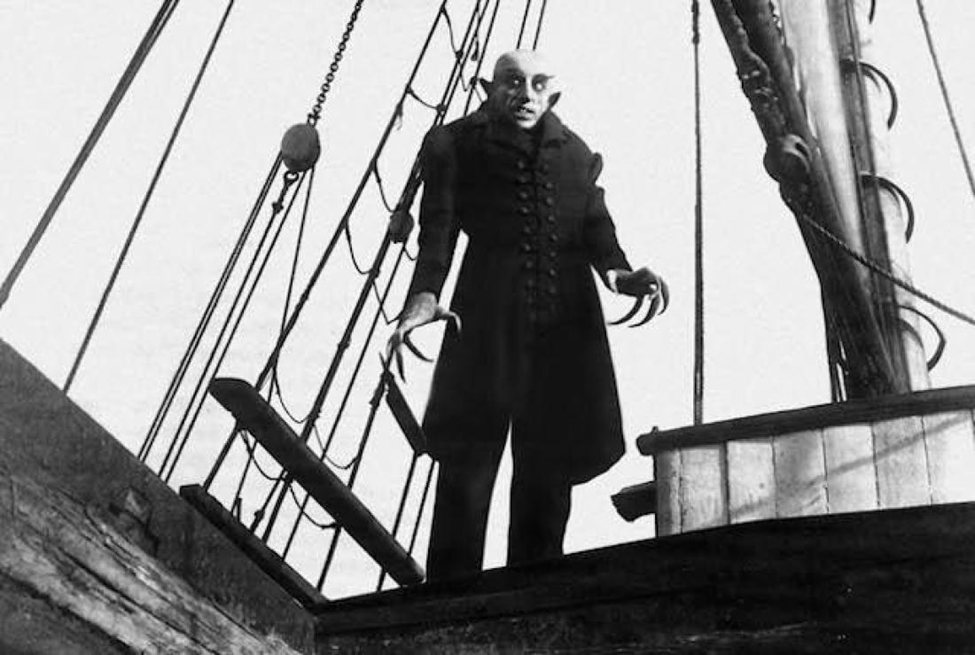
When I first saw it, I was well into my monster fandom and had already seen Karloff’s Frankenstein, Lon Chaney’s Phantom of the Opera, and even Lugosi’s Dracula, and I was a big geek for all of them.  As such, my father felt little hesitation about letting me stay up late on a Saturday night to watch Nosferatu on a local PBS station.  In retrospect, it wasn’t the terrifyingly verminous visage of Max Schreck’s Graf Orlock (as the film’s Dracula was called) that really filled me with terror (though – and let me be clear on this – that DID NOT HELP), it was what the film did with shadows, particularly the famous shot of the vampire’s silhouette ascending the staircase at the film’s climax, that ultimately did me in.  For literally months afterward, I was scared to go into my hallway late at night because the moonlit shadows that illuminated the staircase just outside my bedroom filled me with dread.  I also began making it a point not to drink anything for two hours before bedtime, because running out to the bathroom in the middle of the night suddenly required more courage than I could typically muster. 
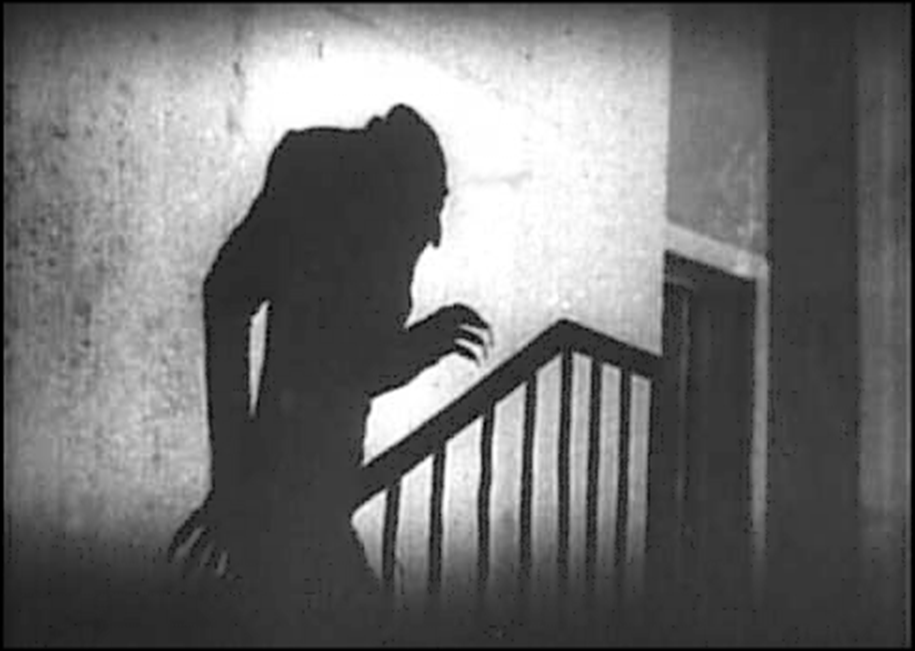
Picture being eight years old and imagining THAT thing was approaching your door at 3 in the morning…

Hell, if I’m being completely honest here, I even had issues nearly into adulthood about sleeping with the door to my room open due to the sequence where the Nosferatu walks in through the Harker character’s bedroom doorway, and it took owning multiple dogs for me to really ever get over it.  So yeah: FUCK THIS MOVIE. It’s the only horror move I’ve ever seen that not only scared me but traumatized me, and it owes me more hours of lost sleep than could ever be repaid.
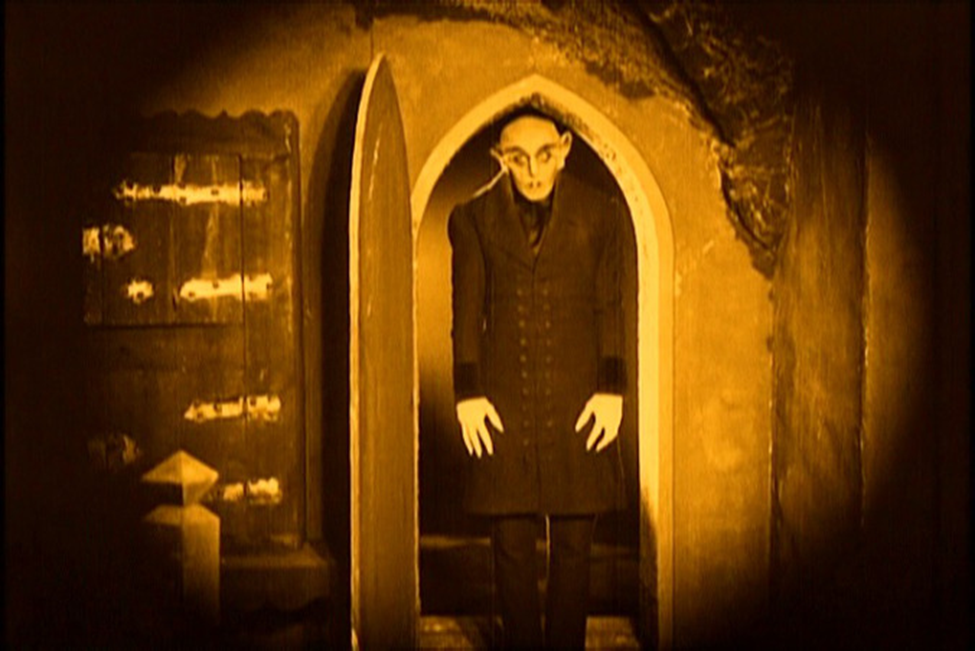
NOPE. OH HELL NOPE.

Don’t misunderstand me, though: I love it, too, and the fact that it remains that one movie that was able to play and prey so much on my terror has earned it my undying respect.  I was eventually, finally, inevitably able to start watching it again when I was a teenager and have easily seen it dozens of times, and I credit it with engendering my interest in silent cinema and my near militancy towards anyone who tries to dismiss those films as archaic and ineffectual. 

Now, as I’m sure you’ve already heard or read many times before if you’re reading this now, this was the first full – albeit totally unauthorized – film adaptation of Dracula, and due in part to the film’s producers, Prana Film, not having obtained official approval from the widow of Bram Stoker to actually adapt the novel (more on that in a bit), it made some departures from the source material, beginning with the names of characters. Count Dracula here was renamed “Graf Orlock,” Jonathan Harker was renamed “Thomas Hutter,” his wife Mina was renamed “Ellen,” Professor Van Helsing was renamed “Professor Bulwer,” Renfield was renamed “Knock,” and the main action was transposed from London to the German port city of Wismar, here renamed “Wisborg,” presumably because someone said, “Fuck it, we’ve renamed everything else.”  As mentioned before, the film’s vampire, played unforgettably by Max Schreck, was neither the proud aristocratic predator nor sexy beast of the novel and numerous later adaptations – he was instead Death incarnate: a grotesque monstrosity with rat-like facial features, raptor-like talons, and spidery movements and mannerisms who bore the Black Death (better known as the Bubonic plague) and offered no premise or promise of eternal life.  Other than that, the story of a powerful vampire moving from an obscure, remote country steeped in superstition to a civilized metropolis remains spiritually intact…at least until its denouement, which goes far afield from the novel but arguably (and I would argue this) ends on a far more poignant and heartbreaking note.  It also entered into the popular lexicon of vampire lore the trope that sunlight was fatal to the undead, an idea that was not present in either Stoker’s novel or earlier superstitions.  Oh, um…spoilers?
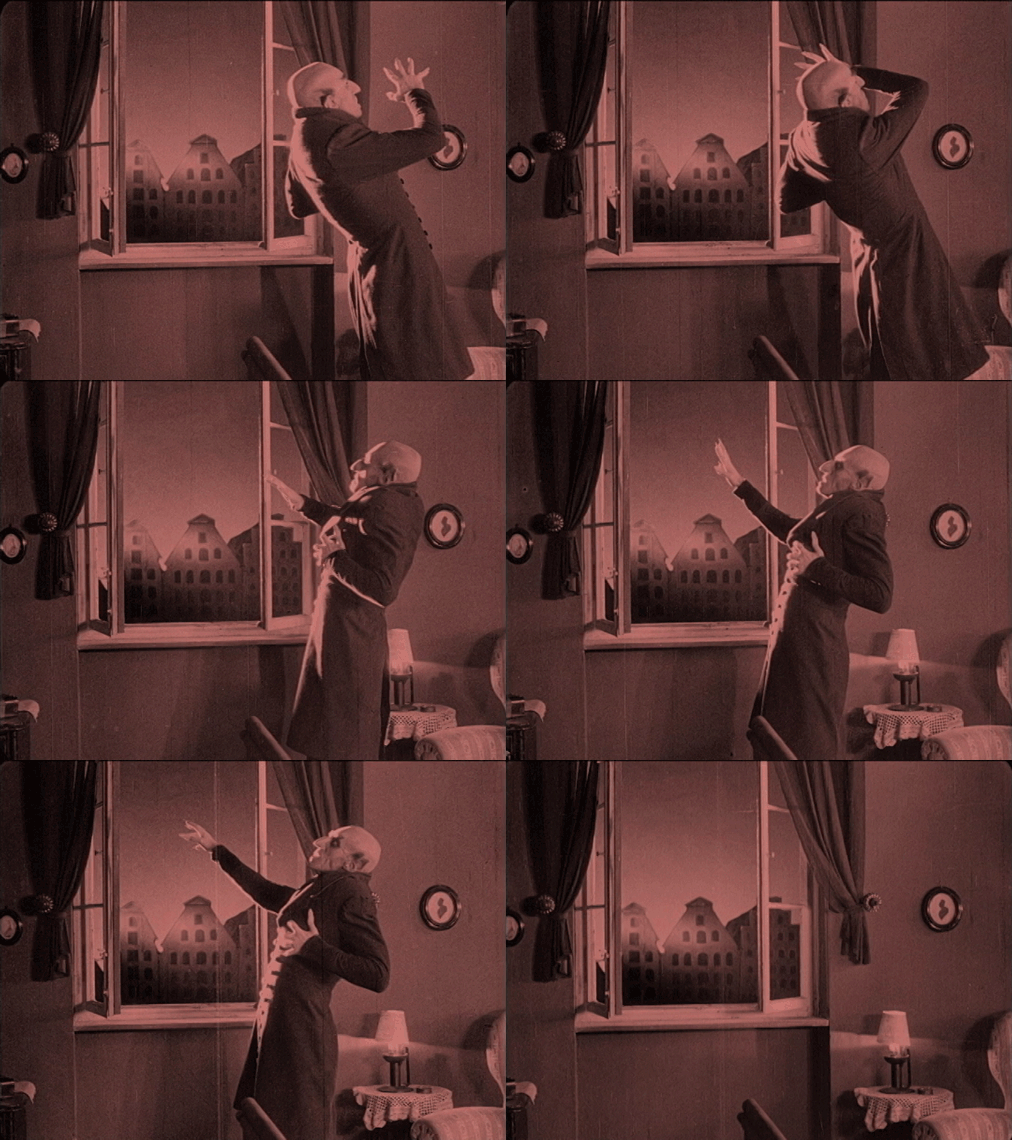
Too late. In my defense…you’ve had over a century.

While undeniably supported by its appropriated literary pedigree, Nosferatu remains a visual masterpiece that still stands separate and above all – or at least nearly all – other versions of Dracula.  Mixing stop-motion, reverse exposure, highly symbolic framing, and yes, those infamous shadows that fueled my nightmares, Nosferatu features one famous sequence after another, each one arguably spookier than the one before it.  While subtitled a A Symphony of Horror due to having what was then the unique idea of having a score written exclusively for the film, Murnau’s film itself boasts a profoundly rhythmic quality to its visuals and pacing, to the point he supposedly utilized a metronome to make sure the actors kept time during their scenes. In a deviation from many of his contemporaries, and despite the film’s fantastical nature, Murnau used heavy location shooting, giving the film a marked sense of naturalism that enhanced its supernatural elements without undermining its Expressionist origins. Besides Murnau’s excellent direction, the film featured dreamlike cinematography from Fritz Arno Wagner and production design from Albin Grau, one of the film’s producers and an artist who had a marked predilection for the occult (he was even rumored to have been a straight-up diabolist). Grau specifically deserves credit for the design and appearance of Orlock and was responsible for some of the film’s legendarily spooky promotional art.
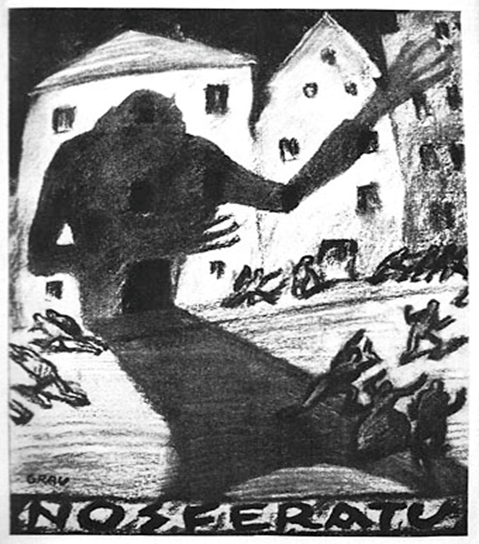
A promotional poster for Nosferatu drawn by producer and production designer Albin Grau.  Legend has it that Grau, an occultist and possible diabolist, was why the film included none of the original novel’s Christian imagery.

Of course, as mentioned earlier, in an amazing demonstration of ignorance, arrogance, dishonesty, parsimony, or stupidity (and maybe all of the above), Prana Film did not acquire the rights from Bram Stoker’s widow, Florence Bascombe Stoker, to adapt the novel onto film. While the early silent era was rife with filmmakers unofficially adapting other source material – one of Murnau’s prior films, the now-lost Der Januskampf, was itself an unofficial version of The Strange Case of Dr. Jekyll and Mr. Hyde – and despite changing many of the core characters’ names, the filmmakers did very little to hide the relationship between Nosferatu and Dracula.  Thus, when Florence Stoker was anonymously mailed the program of the film’s Munich premiere, which advertised itself as a “free adaptation inspired by Bram Stoker’s Dracula,” she had more than ample grounds for what turned out to be a landmark lawsuit, which ended with the still-unprecedented (and thankfully unrepeated) legal order for all copies of Nosferatu to be destroyed.  While an absolute nightmare scenario for any film, in Florence Stoker’s defense, she was a nearly-destitute widow in her early sixties when she learned that the film had been produced without her permission. Furthermore, and contrary to popular perception, Prana Film explicitly declared bankruptcy so as to avoid paying her any compensation whatsoever from the film’s proceeds – they were not actually bankrupted by her lawsuit as many have repeated and misrepresented.  While her vindictiveness may have been short-sighted – to the degree that she’s sometimes vilified – I find it hard to say that her anger was unwarranted. Of course, this should also be weighed against the fact that of the 20 feature films Murnau completed, 12 are now lost, likely forever; that we could have lived in a world without Nosferatu remains a chilling thought. Fortunately, the verdict proved difficult to enforce and the film did survive, with copies having found their way into many other countries by that point. Nosferatu made its American debut in New York City in 1929, coming off the success of the fully authorized Broadway production of Dracula and Murnau’s critical laurels in the aftermath of his Oscar-winning Sunrise.  It was then something of a forgotten entity for several years after that before being rediscovered through airings on PBS and UHF stations in the 1960s and subsequently acquiring its much-deserved reputation as a cinematic masterpiece.

In the world of film studies, Nosferatu is also widely known for having been subjected to a variety of interpretations, many of which are amusingly contradictory but which have also been known to add to the film’s menace and gravitas.  Former Weimar era film critic Siegfried Kracauer, in his seminal but now often-disputed tome From Caligari to Hitler (1947) credited Nosferatu, with its story of a monstrous figure preying on an unsuspecting populous, as being among a series of films of the era that presaged the coming of Hitler and the Nazis (for the record, I don’t actually believe that, and Kracauer’s book is often held up as a notorious example of someone imposing their interpretations on films in the absence of evidence and accurate context).  Certain queer scholars have also looked at the film as representing high camp and sexual stigmatization (deriving in part from Murnau having been gay), and some psychoanalytical scholars have gone so far to state outright that Schreck’s Orlock was meant to personify an erect phallus because, well…why wouldn’t they do that?
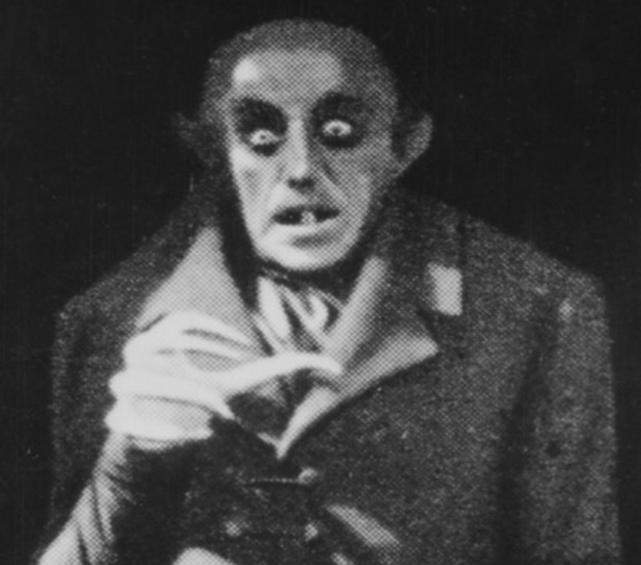
Pictured: Apparently a phallus. A very surprised phallus.

The one interpretation that has the most purchase nowadays, regrettably yet understandably, is the possibility that the film may have been intended, one some level, to be anti-Semitic.   Many observers have remarked that Orlock’s rat-like appearance was similar to later anti-Jewish propaganda in the Nazi era– which is sadly true – and that the film’s narrative of a rich, Eastern European monster invading a picturesque German city, spreading the plague, and victimizing a wholesome German woman was trying to play on the fears of economic displacement, cultural death, sexual miscegenation, and the infamous “blood libel” that were, and sadly still are, major defining traits of anti-Semitic and white supremacist rhetoric. And certainly, there’s a lot of that anti-foreigner and even anti-Jewish bias in Stoker’s novel to begin with.  Whether that was a true aim of the film or not remains very speculative, and it’s very possible that both the film and the later Nazi propaganda drew separately upon shared archetypes. Henrik Galeen, who wrote the film’s screenplay, was himself Jewish (though not Eastern-European, as were many of those specifically targeted for scorn by Weimar-era anti-Semitism), and of the film’s chief creative personnel who lived to see the rise of the Nazis in the 1930s, only the film’s leading lady Greta Schroeder and its cinematographer Wagner actually remained in Germany for the duration of the war.   Regardless of whether the symbolism was meant to be read that way by the filmmakers, consciously or unconsciously, the image of Orlock has been too-often appropriated on the internet by Nazis and the alt-right as representing the “predatory Jew” or “blood libel.”  (Sigh.)  As said, however, I myself saw it many, many times before this symbolism was even made clear to me…it never encouraged or engendered those beliefs in me nor left me thinking of them as anything other than abhorrent.  I believe it can be watched without those interpretations, and obviously should be, whether they were its creators’ intentions or not. 

Whatever interpretation one makes of Nosferatu, if indeed you choose to interpret it as anything beyond a vampire movie, I think it’s inarguable that at least some of Nosfeatu both grew from and reflected the horrors of its time and place. And because of that, the film represents history – not only cinematic history or Dracula history but of a a post-war Germany that was doomed to slide into barbarism, a Europe that was still-reeling from the horrors of the First World War, and a planet that was only a few years removed from as many as 100 million people dying from the Spanish flu epidemic.  It is a horror film from a time and place that knew well what horror could be. Or, to paraphrase another oft-analyzed remnant from German history, to gaze into Nosferatu is to gaze into history, and you may find, especially on dark nights as the shadows move menacingly on the wall…that Nosferatu may gaze back at you.
RECOMMENDED VAMPING

Released in 2000, Shadow of the Vampire tells an alternate history, behind-the-scenes version of the making of Nosferatu, wherein F.W. Murnau (John Malkovich) hires an actual vampire (Willem Defoe), who he christens as Max Schreck, to play the vampire in his film.  It’s not quite for all tastes, nor is it the comedy its premise might indicate, but a compelling horror film in its own right about the excesses of artistic visionaries that features an award-caliber performance from Defoe.

BEYOND THE GRAVE

His Name Means “Terror”

One of the clever concepts that Shadow of the Vampire played with is that, in the pre-internet age, there were a number of urban legends bandied about in fandom circles about the “true” identity of Max Schreck, whose surname is the German word for “fright” or “terror”, and thus left many believing the name to be a really cool and on-point stage name (as in “maximum terror” or something).   The most common assumption was that he was another actor under heavy make-up and using the assumed name, or perhaps a genuinely freaky-looking guy who Murnau and company found and was never heard from again.  When I was a kid attending a fan convention with my friends, I even sat through a cockamamie theory put forth by an exuberant “expert” that Schreck was actually Bela Lugosi, who legitimately had a bit part in Der Januskampf, Murnau’s earlier film, before emigrating to the United States.  While the theories enhanced the film’s mysterious cache for a time, the truth, as it turns out, wasn’t terribly mysterious. There was actually a prominent German actor at the time with the somewhat fortuitous name of Max Schreck, and he was outside of his verminous makeup a fairly normal looking guy who had a very long career as a character actor in numerous German film and stage productions.  He even appeared in a later Murnau film, and a comedy no less, called The Grand Duke’s Finances. The real Max Schreck passed away from a heart attack in 1936 at the age of 56, hours after performing onstage.

Symphonies of Horror

As mentioned, Nosferatu: A Symphony of Horror was one of the first films to have had a score written expressly for it, crafted by composer Hans Erdman.  However, the film was produced before film could be synchronized with sound, so no actual recording of the score was ever made to be synched with the film.  Only certain written portions of the score still exist, though composers Gillian B. Anderson and Jordan Kessler created a restored version in the 1990s that is commonly used today.  Many, many other composers and artists, however, have crafted their own accompaniment to the film over the years, including longtime Hammer films composer James Bernard, experimental chamber group Art Zoyd, and Goth Metal pioneers Type O Negative. 

What’s in a name? Part 1

For a film that has been in the public domain for decades, there are many versions of Nosferatu in existence of varying lengths, some slightly over an hour and some closer to the original film’s running time of 89 minutes.  As a general rule of thumb, versions that use some of the original novel’s names, like Dracula, Harker, Lucy, Van Helsing, etc., and use the solo title of Nosferatu without its original subtitle may be derived from lower quality 16mm film prints; besides being unrestored, they are sometimes displayed at a slightly accelerated film speed so that they would run shorter on television.  They’re better than not seeing the movie at all, of course, but this is a film worth tracking down a restored version.  The closest to “official version” is the one licensed from the F.W. Murnau archive that is released by Kino video on Blu Ray and other formats, which included English translations of the original title cards, completely remastered footage, and the restored Hans Erdman score.  

The Afterlife of F.W. Murnau

Though best known for Nosferatu, Friedrich Wilhelm Murnau was one of the great film visionaries of the late silent age.  His later film The Last Laugh (1925), a collaboration with actor Emil Jannings and legendary cinematographer Karl Freund (who also did the cinematography for Browning and Lugosi’s Dracula) was one of the best regarded films of its day due to what was called the “unchained camera,” which saw the camera put through a plethora of motions and into a variety of locations that were simply unexpected from the typically static camera placement in films of the time; no less than Alfred Hitchcock considered it one of his greatest film influences and credited it with forever altering how he perceived the visual potential of film.  Arguably Murnau’s masterpiece, however, was his first American film, Sunrise: A Song of Two Humans (1927), a film about a married couple rediscovering their love for one another after the husband’s infidelity and murderous intentions.  It furthered Murnau’s earlier innovations in film scoring from Nosferatu and, though silent, was one of the first feature films to use a synchronized soundtrack and sound effects to incredible, emotional effect.

A week before the release of what became his final film, Tabu (1931), Murnau was tragically killed when his car, being driven by a then 14-year-old servant, crashed on the Pacific Coast parkway in Los Angeles.  In his highly discredited “tell-all” book Hollywood Babylon, experimental filmmaker Kenneth Anger made some extremely sordid and highly slanderous insinuations about Murnau’s relationship with the teenager that have entered into the realm of urban legend but have never been corroborated in any substantive way outside of Anger’s book.  Much of Hollywood Babylon has been debunked over the years, and, personally, I only mention these insinuations to cast doubt upon them.

There is one genuinely creepy footnote to Murnau’s legacy, however: in 2015, his grave in Munich, Germany was found to have been broken into and his head removed from his body.  At the gravesite were traces of candle wax, leading investigators to believe that the desecration occurred as part of a bizarre occult ceremony, with the general assumption being that Murnau’s body was targeted due to his association with Nosferatu.  To this day, the perpetrators have never been caught, and Murnau’s head has been neither recovered nor returned…


Review: Walk With Me

By Jonathan Morris, Antiscribe.com

vlcsnap-2017-06-17-16h38m31s136

If there’s one thing that I’ve always known about my best friend and podcasting partner (on The Irreverent Cineastes Podcast) Andrew Golledge, it’s that he’s a New Yorker.  Andrew loves the city and (almost) everything about it: it’s how he defines himself, and he’s consciously aware of how it has defined him.  It’s important to note, however, that he was not born to the city, but came to it as the son of immigrant parents – British and Panamanian – and thus he brings to it the perspective of the outsider.  It’s a perspective as viable as that of the native, and for a city forged from the dreams of travelers worldwide, one integral to understanding its history and culture.  But with that perspective comes the understanding that this amazing city isn’t necessarily for everyone, and that keeping a forge of dreams means that the hopes of some are going to be burned away…
vlcsnap-2017-06-17-16h40m33s764

For Walk With Me, his most ambitious short subject to date, Andrew confronts this understanding of the city’s innate pessimism with a haunting mood piece, wherein a young woman, both isolated and seeking isolation in the city of nine million stories, finds herself haunted by a supernatural being that at once fills her with dread yet provides much-needed understanding.  In Andrew’s view, the entity is the city itself, both ominous and enticing, that shadows his character’s steps (or at least, that’s a fellow Irreverent Cineaste’s interpretation), and that ultimately helps her confront the reality that New York itself doesn’t guarantee anything to anyone.  If I’m making it feel like a harsh message, it’s to Andrew’s credit that he doesn’t: it’s a message handled with empathy and care, and he, along with his actor Betty Kaplan, successfully internalizes and effectively externalizes that feeling of regret, sorrow, loneliness, and ultimately, release.  If I have a criticism of the work, it’s that I feel Andrew could have perhaps been more focused narratively, with added context that could convey more precisely his own interpretation – while I found room to construct my own, some may not, and it could belie the due appreciation for his ever-burgeoning, ever-evolving visual acumen and editing style.  In Walk With Me, the content of Andrew’s cinematic voice doesn’t quite yet match his eloquence, but the potential is obvious, and it would not surprise me if someday many will know Andrew Golledge as one of New York City’s clearest and most distinctive cinematic voices.

Walk With Me will be showing at the 2017 Cinema New York City Film Festival on September 3rd, and you can buy tickets here.

The trailer for the film can be viewed here.

clean_CinemaNewYorkCity-2017


A Christmas Carol – The Antiscribe Overview

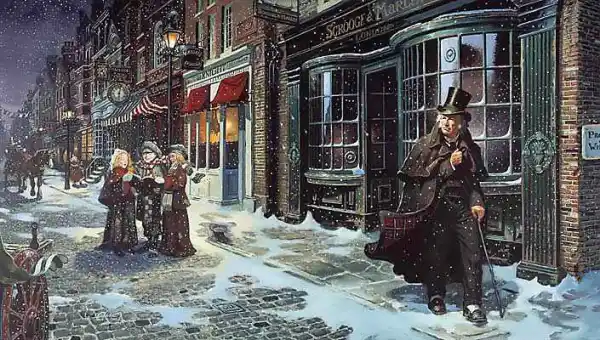
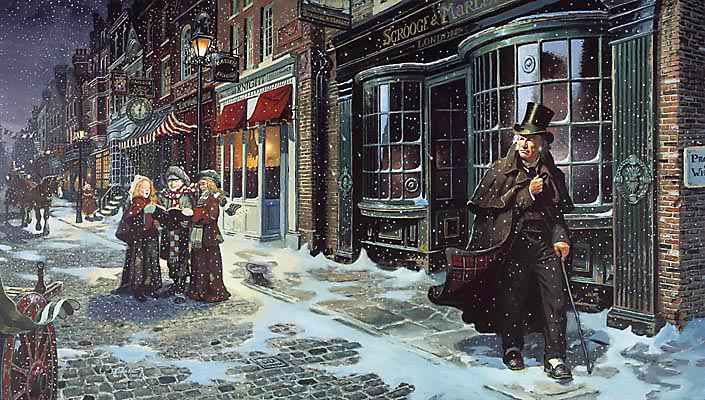
Christmas Carol Illustration

Introduction

Few works in the history of popular culture have had as much pronounced effect as Charles Dickens’s A Christmas Carol, first published in 1843.  While Christmas Day had always been a sacred, solemn feast day within the Christian faith (just as the Winter Solstice had been in many pagan cultures before it), it wasn’t until the middle part of the 1800s that many began to see it less as a site of religious devotion than as a holiday to be celebrated, and to be celebrated most specifically through the act of giving.  While A Christmas Carol didn’t spawn this tradition itself, it, more than any other force, popularized it throughout the western world.  Through its powerful, secular story of redemption through charity and love, Dickens imparted to all that Christmas was a time to celebrate all that was worthwhile about the human race, most specifically our love for one another, and our compassion for those less fortunate.

Continue reading “A Christmas Carol – The Antiscribe Overview”

From Arkham to Aurora: Thoughts on the “Batman” Massacre

By Jonathan J. Morris, Antiscribe.com

Over the last week I’ve been striving, with significant difficulty, to write a review, essay, analysis, what-have-you, of The Dark Knight Rises. Certainly, prior to the film’s release I crafted two overviews on the topic of Batman and his history in popular culture, and naturally I wanted to make my write-up of the movie the best, most comprehensive, most insightful piece that was in my ability to do. That plan hasn’t changed, but the world I expected to write about TDKR in has, and I can’t articulate my thoughts about this movie – nor likely any movie – before I address that which has been weighing most heavily on my thoughts. Therefore, before I can discuss Christopher Nolan’s epic on both its own terms and in terms of the cinema, I feel I must talk about the Aurora tragedy and, to a certain degree, about Batman.

Continue reading “From Arkham to Aurora: Thoughts on the “Batman” Massacre”

Batman: The Dark Knight’s Best and Worst – Live Action Edition!

By Jonathan Morris, Antiscribe.com

(Note: I had planned to have this up last week, but after learning about the terrible events in Colorado, I though it best to wait a few days.  Though it should go without saying, my thoughts and prayers are with the victims and their families, who were not only members of our greater American community, but fellow moviegoers and Batman fans.  Though far, far, far from the most tragic aspect of this horror, it’s still somewhat unfortunate that it will forever be associated with Batman; as a figure in popular culture, the Dark Knight has always stood as a symbol against guns and gun violence, as well as an idealization that hope and light can someday arise from great tragedy and darkness.  Hopefully, as a nation and a society, once we’ve mourned and grieved these events – and learned from them – we will find our own way onward, toward hope and light.)

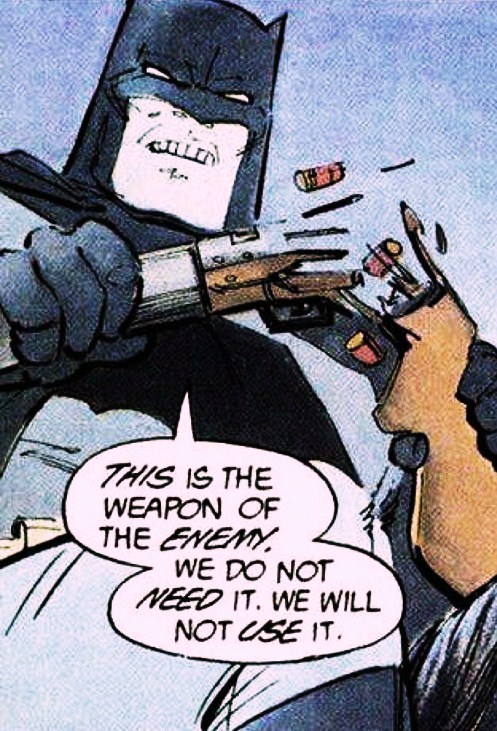
Though Batman used firearms in his first year of existence, he has since stood as a symbol against guns and gun violence.

Continue reading “Batman: The Dark Knight’s Best and Worst – Live Action Edition!”

Batman: The Dark Knight’s Best and Worst – Animation Edition

By Jonathan Morris, Antiscribe.com

Introduction

Well, you just knew this was coming, right?

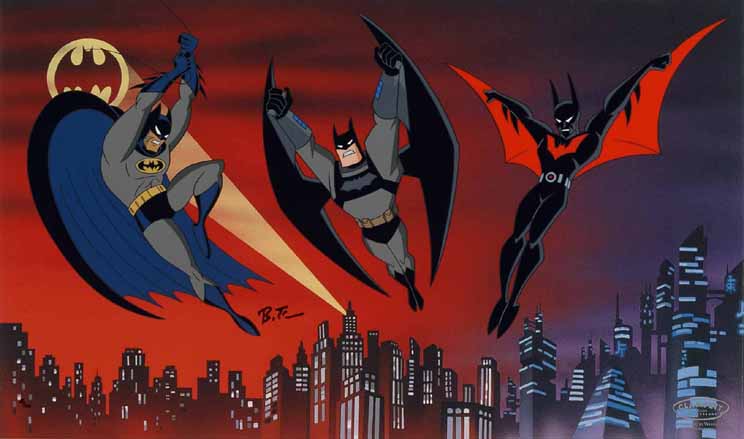
So yes, thanks to our ever more crowded summer movie season, it’s already time again for another survey of a famous character in popular culture…and they rarely come more popular than the one and only Batman.  Whether you think of him as the gritty, vengeful, and brooding Dark Knight, or the noble, altruistic, and exciting Caped Crusader, the Guardian of Gotham City is an indelibly ingrained part of our popular culture, an American icon (though not always in a positive way), and the definitive urban avenger. I also don’t think it’s unfair to say that Batman has long surpassed his contemporary Superman as the world’s most famous superhero, and he’s arguably the most consistently compelling and undeniably the most commercially successful superhero of all time.  For me, though, and I think for any observer of popular culture, Batman should also be considered among the most fascinating.

As times go by, many famous characters are reinterpreted and recreated for each new generation, inevitably drawing upon the various tastes and subtexts of that given moment in time. Bob Kane’s Batman, though, perhaps more than any other character I have ever seen anywhere in media, has demonstrated an astonishing ability to be readily transformed and transfigured to any given era without ever subsequently becoming an anachronism.  It’s not that Batman is timeless – though he is – it’s that he’s somehow always timely. It’s an amazing attribute, and one that makes the Dark Knight not only distinctive in the history of comics, but in world literature and media as well. Continue reading “Batman: The Dark Knight’s Best and Worst – Animation Edition”

Our Marty…

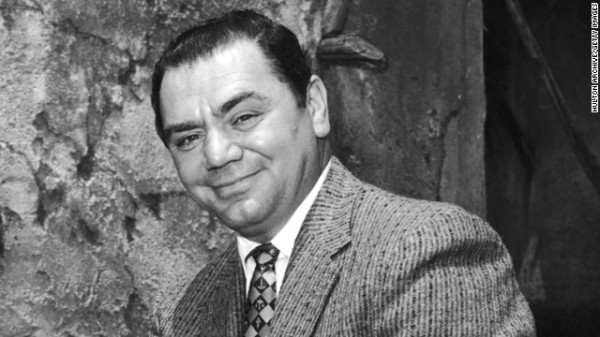
Ernest Borgnine (January 24, 1917 – July 8, 2012)

Today, sadly, we lost another link to the days of Classical Hollywood with the passing of Ernest Borgnine.  I don’t typically write obituary pieces here, because I’m honestly someone you’ll typically find disdaining the hoopla that often surrounds the death of major celebrities. However, Ernest Borgnine probably won’t have every detail of his funeral plastered all over 24 hour news channels, nor likely have his death and life fetishized beyond all boundaries of good taste by special commemorative issues of People or Entertainment Weekly, so I feel confident that eulogizing him in my own way will still fall firmly on the side of good taste. Continue reading “Our Marty…”

“The Amazing Spider-Man” – The Antiscribe Appraisal

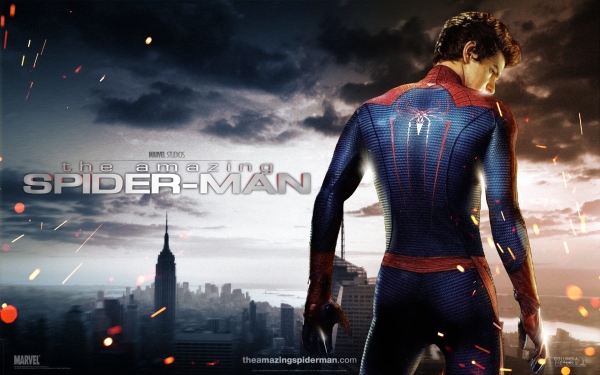
While undeniably the least anticipated of this summer’s trio of big-time, tent-pole superhero movies, The Amazing Spider-Man, beyond any discussions about its quality or worth, has become the latest test case for an ongoing pop culture debate – how soon, exactly, is “too soon” to do a reboot?  Is there even such a thing as “too soon,” anymore?

Last week, while composing my epic-length overview of Spider-Man in various media I presented my argument that Sony was right to kill off their still nascent Spider-Man franchise after the debacle that was Spider-Man 3, even if that left me with the prospect of a new Spider-Man movie I felt more obligated to see than excited to.  Of course, I understand, from the corporate perspective, the reason for the shortened turn-around: if Sony hadn’t kept their license active, than the lucrative film rights to the character would have reverted to Marvel/Disney.  But still, a completely new version after only ten years and two months – to the day – since the first film, let alone only five years since the last film, even in our much more accelerated culture, surely seems a little hasty. Continue reading ““The Amazing Spider-Man” – The Antiscribe Appraisal”

Your Friendly Neighborhood Spider-Man: The Best and Worst – The Antiscribe Overview

By Jonathan J. Morris, Antiscribe.com

Introduction

With the coming July 4 holiday bringing the anticipated (though not by everybody) reboot of the Spider-Man franchise, The Amazing Spider-Man, it seemed like an appropriate moment to once again trace the filmic and televisual history of another major figure in popular culture. Who? Why, your friendly neighborhood Spider-Man, of course!

The core backstory of Spider-Man is well and widely known – Peter Parker, a socially awkward but brilliant young man from Forest Hills, Queens is bitten by a radioactive spider (or a genetically enhanced one, depending on the era) while on a school field trip and soon finds himself blessed (and cursed) with spider-like powers.  After a failure to use his “gifts” properly results in personal tragedy, he realizes the deeper meaning of the mantra “with great power, comes great responsibility.” Becoming the superhero Spider-Man, he protects the neighborhoods of his native New York City from both everyday criminals and monstrous super-villains; indeed, Spidey’s rogues’ gallery is second only to Batman’s in depth and popularity, boasting the Green Goblin, Venom, the Lizard, the Scorpion, the Kingpin, Carnage, the Sandman, Mysterio, Electro, and (my personal favorite) Doctor Octopus. Continue reading “Your Friendly Neighborhood Spider-Man: The Best and Worst – The Antiscribe Overview”

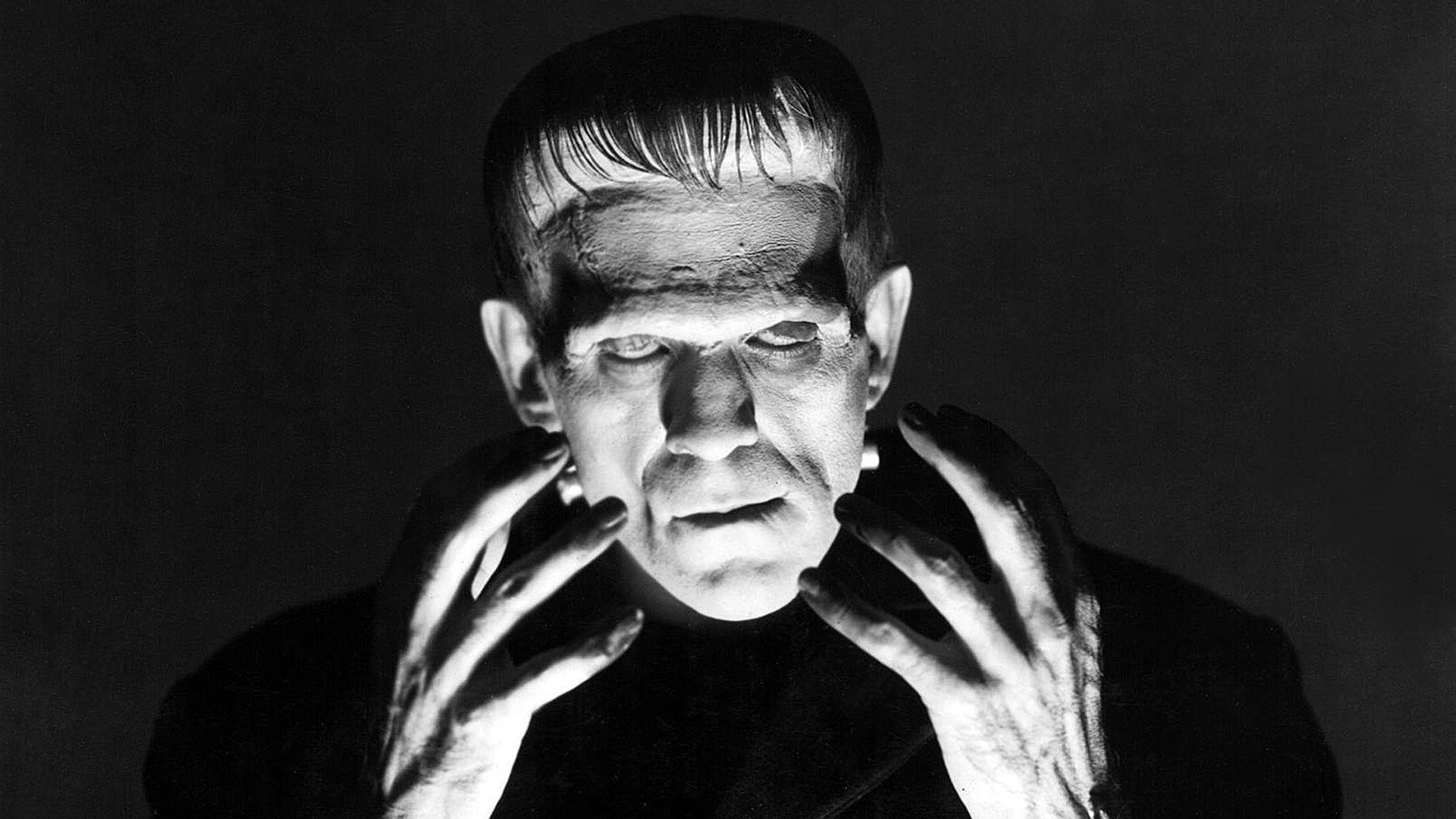
Frankenstein: The Best and Worst – The Antiscribe Overview

“Did I request thee, Maker, from my clay
To mould me Man, did I solicit thee
From darkness to promote me?”
-John Milton, Paradise Lost

By Jonathan Morris, Antiscribe.com

This past Sunday I attended, for the second time, a high definition screening of the Royal National Theatre’s production of Frankenstein, directed by Danny Boyle, which gave me an excuse (not that I ever really need one) to revisit the cinematic legacy of two of my favorite figures of popular culture, the brilliant but misguided Dr. Frankenstein and his tragic and terrifying Creation (much as I did with Sherlock Holmes last year). Continue reading “Frankenstein: The Best and Worst – The Antiscribe Overview”

The Misanthropic Holmes: “House” and “Sherlock”

“”It’s a basic truth of the human condition that everybody lies. The only variable is about what. The weird thing about telling someone they’re dying is it tends to focus their priorities. You find out what matters to them. What they’re willing to die for. What they’re willing to lie for.” – Gregory House, “Three Stories.” House

“I may be on the side of the angels…but don’t think for one second that I am one of them.”
-Sherlock Holmes, “The Reichenbach Fall.”  Sherlock

By Jonathan Morris, Antiscribe.com

Widely regarded as the greatest, the most influential, and certainly the most popular detective in the history of world literature, Sherlock Holmes and his appeal may just transcend that of the mystery genre itself.

You see, while the best of Sir Arthur Conan Doyle’s Sherlock Holmes stories were excellent mysteries centered on intriguing and compelling deductions, so much of what makes Sherlock Holmes beloved to the point of devotion for so, so many really lies in the character of the man himself.  The world’s first, and only, consulting detective has been interpreted and reinterpreted time and time again, with presentations both vast and varied, but what truly makes him so undeniably interesting is that he’s so unlike any other main character you’ll find in the literature of his time, or even of most times since.  Holmes typically doesn’t strive to win the love of a girl. He’s not interested in wealth or fame or power. And only on rare occasions does he take a true interest in upholding or protecting the greater good.  He eschews relationships, despises romance, and views the righting of wrongs as less a moral imperative than a source of distraction from, at best, boredom, and, at worst, habitual drug abuse. Continue reading “The Misanthropic Holmes: “House” and “Sherlock””

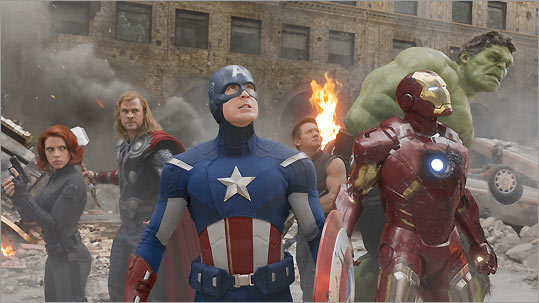
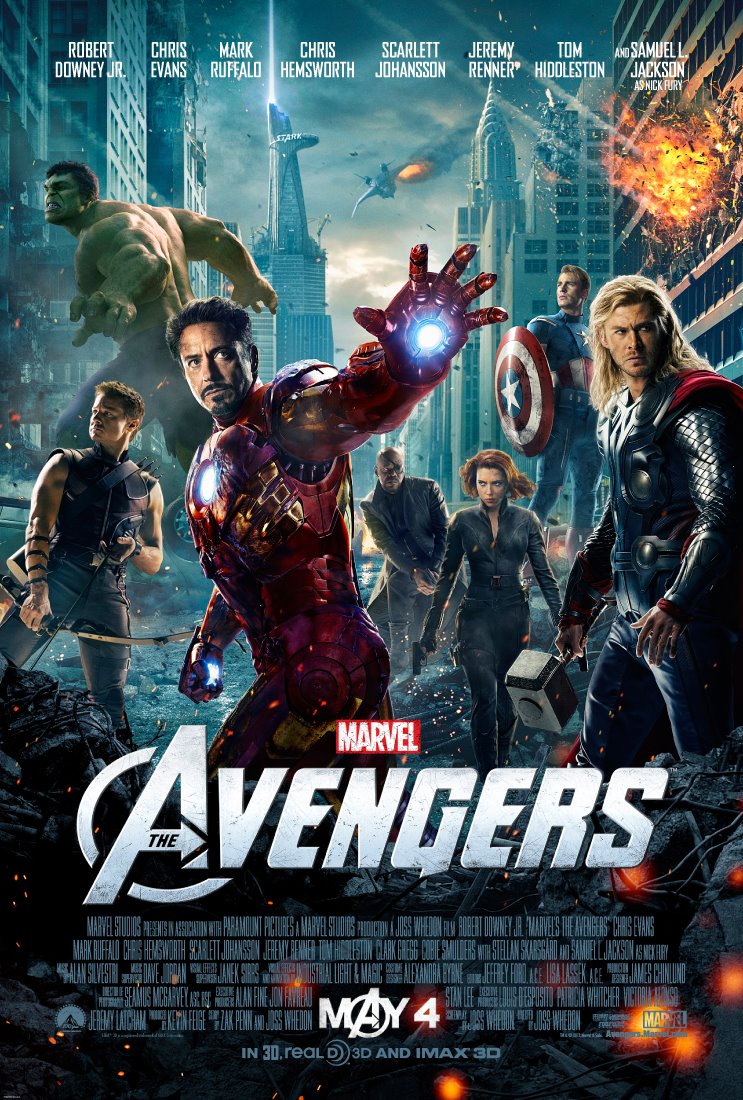
MARVEL’S THE AVENGERS – The Antiscribe Analysis

By Jonathan Morris, Antiscribe.com

This past Saturday, thanks to a former classmate’s random act of kindness, I was granted the opportunity to see the much-anticipated Marvel’s The Avengers at its New York City première on the closing night of the Tribeca Film Festival.[i]  Now, as it happened, traveling to the Tribeca Performing Arts Center from my home in New Jersey took me through the PATH station at the World Trade Center.  Though I’ve wanted to go down there many, many times over the last few years, due to some deeply-held and overpowering emotions this was actually the first time I had visited the site since after September 11.  As I stepped out of the station, located at the foot of One World Trade Center, I gazed up at the still under construction Freedom Tower.  Though I expected to be slightly more overcome by emotion than I actually was, I nonetheless experienced a deep sense of poignancy that stayed with me as I headed over to the screening itself.

Continue reading “MARVEL’S THE AVENGERS – The Antiscribe Analysis”

A Desperate Nostalgia: Hollywood, the 2012 Oscars, and the Way We Watch Movies Now

By Jonathan Morris, Antiscribe.com

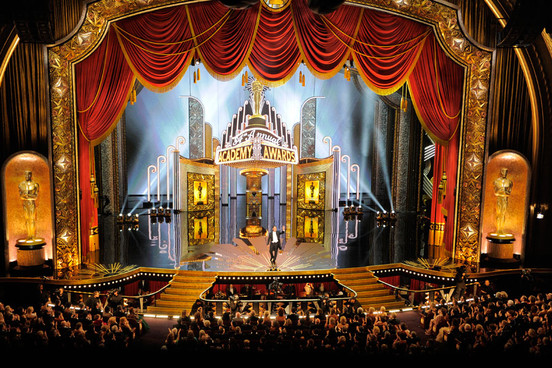
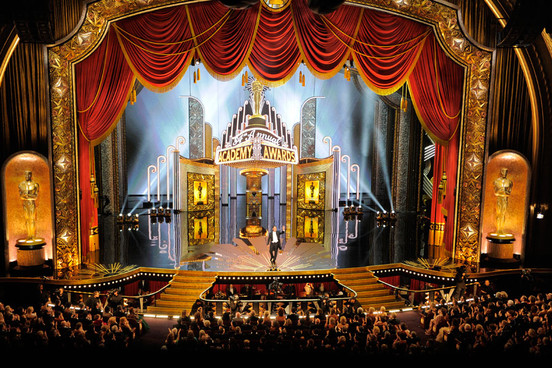
It has now been about three weeks since the 2012 Academy Awards telecast aka “the Oscars,” aired.  Generally speaking, the Oscars represent one of the biggest televised events of the year, typically second only to the Super Bowl here in the United States; unlike the Super Bowl, however, the Academy Awards have not been setting new ratings records each year, instead having struggled with trying to ebb an annual ratings decline.  This year saw the Oscars stem that decline, briefly, with the much-ballyhooed return of Billy Crystal to hosting duties; despite that, it still garnered lower ratings than this year’s Grammys (which were admittedly inflated by the death of Whitney Houston the day before), the demographics for the show in the key 18-49 demographic were unremarkably flat with earlier years, and the show received fairly poor reviews almost across the board. What bothered me most about this year’s Oscars, though, was just how depressing and disheartening they were about the movies themselves, and how uncertain they seemed about the very medium they were ostensibly celebrating. Continue reading “A Desperate Nostalgia: Hollywood, the 2012 Oscars, and the Way We Watch Movies Now”

The (Broken) Girl with the Dragon Tattoo (aka Män Som Älskar Brutet Flickor)

"The World's Coolest Heroine"

By Jonathan J. Morris, Antiscribe.com

Released about two months ago into the crowded glut of holiday awards season, David Fincher’s movie version of The Girl with the Dragon Tattoo has clearly already had its moment in the Scandinavian sun. Arriving with a heavy dose of critical praise and entering theaters with a snarl of assumed feminist defiance, the film left them with surprising rapidity and an almost audible whimper over how little money it made, at least compared to somewhat over-elevated expectations. Based on the first of the late Stieg Larssen’s bestselling “Millennium” novels, which, like many bestsellers, falls firmly into the category of “overrated,” the film will nonetheless likely prove to be the first of a cinematic trilogy, in spite of its modest success.  Of course, though it hardly needs to be restated, this was not the first movie version of Larssen’s novel, nor even the first in recent memory. The 2009 Swedish language adaptation, by the standards of foreign films, had a fairly significant cultural footprint in the United States and earned about $100 million dollars worldwide.  As films go, the Swedish version wasn’t bad for a straight-forward mystery movie; elevated, if that’s the right word for it, by its unflinching portrayal of explicit sexual violence and the characterization of its singular heroine, Lisbeth Salander.  Indeed, the most memorable aspect of that film was Salander, dynamically portrayed by Noomi Rapace, who deservedly has been parlaying that part into international stardom.  No doubt Rooney Mara, who plays the character in the American version, has herself already been doing the same.

The Two Lisbeths: The American Rooney Mara and the Swedish Noomi Rapace.

Continue reading “The (Broken) Girl with the Dragon Tattoo (aka Män Som Älskar Brutet Flickor)”

The Academy Award Nominees for Best Picture of 2011 – The Antiscribe Appraisals

Introduction

Of course, herein lies precisely what the Interwebs didn’t need: another write up of the Academy Award contenders for Best Picture of 2011. To which I say: fair point.  This, however, was one of the first years in a while that I can actually say that I saw ALL of the Best Picture nominees (which I think is pretty impressive…since there’s now NINE of them), and I did so expressly for the purpose of being able to discuss them here on the site.  Unfortunately, given the fact my schedule and personal commitments haven’t allowed me to do the full reviews I’m usually partial to doing, penning this overview is essentially my way of doing the next best thing.

Two caveats:  First, this is not me handicapping the Oscars. I generally only watch them out of obligation, and after last year’s Hathaway/Franco debacle I have absolutely no desire to watch them this year (and those personal commitments will forbid it, anyway). I will comment on whether they deserved consideration, and I’ll make my pick of what I think should win and what I think will (since they’re not the same), but that’s pretty much it. Secondly, I myself won’t be doing any particular kind of ranking of this list (it’s presented in alphabetical order, as is standard) or otherwise doing my personal ranking of my favorite films of the year or anything like that. I’m personally not one for that kind of thing, and I generally feel such lists are defined almost as much by genre biases and false perceptions of import (the always ludicrous “movies” vs. “films” comparison) as anything else. In the end, this is basically my way of doing a bunch of my “Antiscribe Appraisals” in short form since I don’t really have the chance to do them in long (though the one for The Artist: pretty long).  Of course, in some cases, I already did full reviews of those films, and will link to them where appropriate.

And with that, the nominees are… Continue reading “The Academy Award Nominees for Best Picture of 2011 – The Antiscribe Appraisals”

The Antiscribe on Abortion

(Hi! Sorry for the unintended hiatus…no drama involved this time, I’ve just been annoyingly swamped with stuff, leaving me little to no time for personal writing.  I will be back with two movie-related blogs this week, but in the interim, I’m posting this, which I wrote the other day after the entire Komen/Planned Parenthood debacle caused this unending debate to rear its ugly, polarizing head one more time.)

Here’s my thing:  I hate abortion.  I hate that it exists.  I think it’s cruel, I think it’s sad, and that every potential life ended before it begins represents another example of our global society having failed just a little bit more.

With that said, I am, and always shall be, pro-choice, because a woman has the right to choose whether or not she wants or can handle the responsibility for bringing life into the world.  That she had sex, for whatever reason, should not cause her to bear the burdens and experience the joys of childbirth and/or motherhood if she doesn’t choose to. This is especially true since she bears it, physically and perhaps even emotionally, in far greater proportion than the father of that child.  Sexual responsibility should never be discouraged, but no woman should face a life-altering experience for showing questionable sexual judgment; that’s simply not commiserate with being a member of a fair, balanced, and just society.

What personally gets to me is that on many areas of the anti-abortion side we have very hardcore conservatives fighting against the kind of social welfare plans that are at least trying to solve many of the problems that in some cases cause abortions, because they find it easier and more direct to outlaw them.  I’d rather see us all strive for a world where abortions aren’t necessary, as hard as it would be, rather than a world where abortions are outlawed but with all the problems that still cause them prevalent and everlasting.

And yet, it also annoys me when people who are ostensibly on my side argue and debate about what qualifies as a life and what doesn’t.  If it is conceived, whether it be by technicality a life or not, it will forever after have held that potential to be a life.  Trying to argue otherwise dehumanizes the argument, the lost potential, and arguer him- or herself; it changes the nature of the discussion, as well as causes the other side to assume that we don’t care.  Too many of us do, and too well.  Everything else, in a world where once we’re born we’re all essentially reduced to statistics, is little more than a pointless exercise in biological semantics.

I am pro choice, who if it were my choice to make would always choose life, but I’ll never be pro-life, because that would take from me the right to choose life at all.

“The Adventures of Tintin” – The Antiscribe Appraisal

By Jonathan Morris, Antiscribe.com

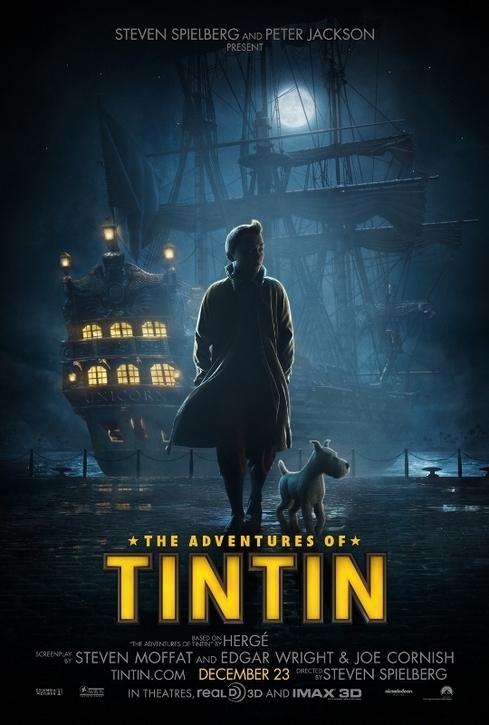
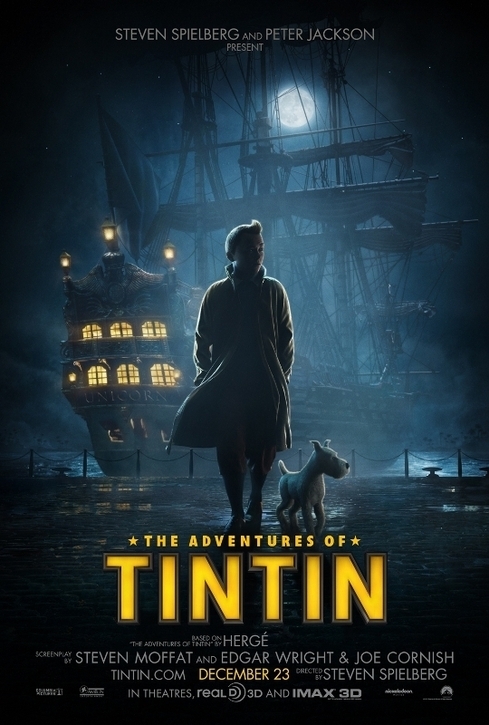
As a scholar who is always interested in popular culture, and especially the ways in which it can be interpreted and reinterpreted across cultural boundaries, I found the idea of seeing The Adventures of Tintin to be an  intriguing prospect.  On the one hand, intellectually it was interesting to see how an internationally popular character would be interpreted for American audiences, and on the other, given the pedigree of its filmmakers, I assumed it would at least be a fun watch.    First illustrated by the Belgian artist Hergé over seventy years ago, the world-travelling kid reporter Tintin has long been a popular icon to many European, and especially French-speaking, countries, but otherwise has never really crossed the Atlantic’s cultural divide, standing as largely an unknown quantity to American audiences. And to be fair, outside of my own reading on the history of comic books and comic art, the character represents something of an unknown quantity to me as well.  However, now that I have seen director Steven Spielberg and producer Peter Jackson’s long in development film version, the appeal of the character remains unknown to me, and I’m assuming it will to others. Whether it’s truly a faithful version of the character and his universe, I’m not one to say, but what I can say, is that as a film, and perhaps more accurately, as a film going experience, The Adventures of Tintin just isn’t very good. Continue reading ““The Adventures of Tintin” – The Antiscribe Appraisal”

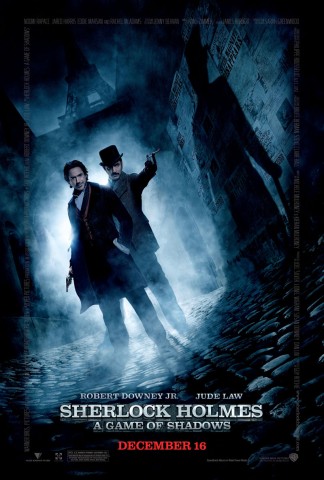
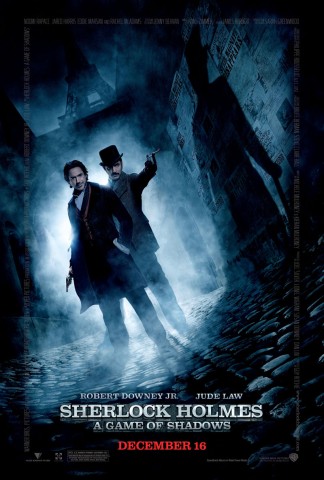
“Sherlock Holmes: A Game of Shadows” – The Antiscribe Appraisal

By Jonathan Morris, Antiscribe.com

When I went to see Sherlock Holmes: A Game of Shadows at my local theater recently I found myself quite irritated as I gazed up at the theater marquis, which advertised the film as “Homes 2.”  Come now, I thought, I know not everyone is a Sherlock Holmes fan like me, but certainly the character is mainstream enough that even the teenage part-timers working at this theater would know the correct spelling of his name.  As I walked out of the theater about two hours later, I looked at the marquis again, and I found that now the spelling error bothered me much, much less.  Whoever this “Homes” guy was, if he wanted this movie, he could have it.

Sadly, though, Sherlock Holmes: A Game of Shadows is technically now and forever a Sherlock Holmes movie: the generically subtitled sequel to Warner Brothers’ initial, game attempt to make a viable mainstream film franchise out of one of popular culture’s most enduring creations.  For the record, I enjoyed the first film two years ago despite some initial consternation, because besides being enjoyable, if not especially great, it remained tethered to most of what Sherlock Holmes was fundamentally about. It may have had chase scenes, fight scenes, explosions, and computer generated effects, but in the end it was still about the master detective, with all of his unique personality quirks and with his friend and ally Dr. Watson in tow, figuring out a complex and inexplicable mystery (if one that had significantly more at stake than the manor house murders that were the literary Holmes’s part and parcel).  Granted, there was never any doubt whodunit (it was a villainous Mark Strong, in fine glower), but how he-done-it was nevertheless intriguing enough to string the action along.  Now, on the other hand, with Game of Shadows, this burgeoning series has completely untethered itself from the identity of Sherlock Holmes, instead turning their version of the character into a kind of bizarre, steampunk James Bond. And rather literally, at that. Continue reading ““Sherlock Holmes: A Game of Shadows” – The Antiscribe Appraisal”

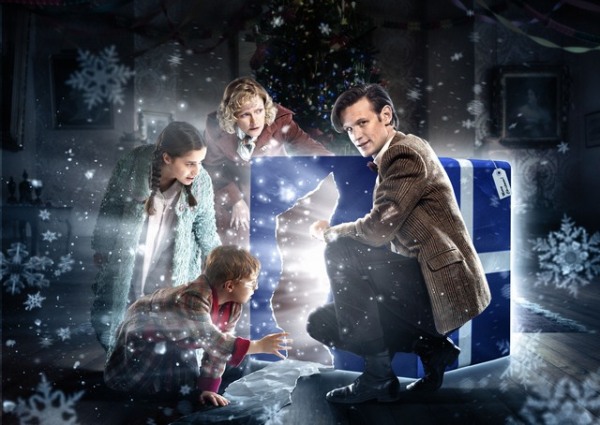
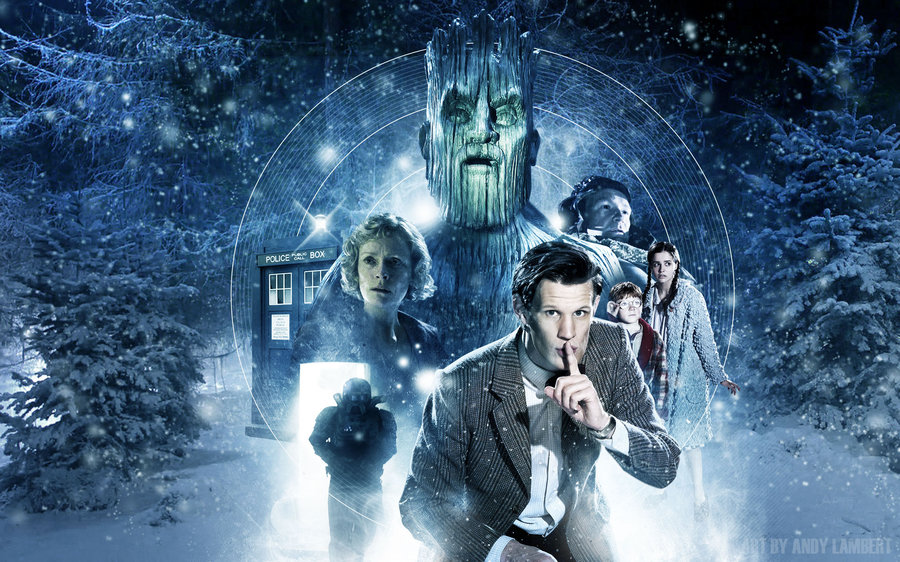
The Doctor Who Christmas Special 2011: “The Doctor, the Widow, and the Wardrobe” – The Antiscribe Appraisal

By Jonathan Morris, Antiscribe.com

Well, now that we’ve put to bed another Christmas holiday, it’s important to look back on things that are most important:  which, if you’re a fan of Doctor Who, means the yearly Doctor Who Christmas Special.

Since 2005, no December 25 has gone by without the BBC airing a new Who episode (though they’ve only aired on Christmas here in the States since 2008); typically, the Christmas specials have served as something of transition between seasons for the series, and sometimes as a thematic preview of the season that is to come.  Under Russell Davies’s tenure as show runner, the Christmas specials were generally “event” episodes that were arguably the most high-profile of their year.  The original 2005 episode, “The Christmas Invasion,” for instance, served as the beginning of David Tennant’s acclaimed run as the Tenth Doctor, while 2009’s “The End of Time, Part 1,” marked the beginning of the Tenth Doctor’s end (the second part aired on New Year’s a week later).  2006 saw “The Runaway Bride,” a rather comedic episode that guest-starred popular British comedienne Catherine Tate, offering a transition between the Doctor saying goodbye to his former companion and soul mate, Rose Tyler, and his next companion, Martha Jones.  “The Voyage of the Damned” in 2007 represented the most publicized and highest rated episode of Doctor Who since its relaunch, as the producers scored the coup of getting pop star Kylie Minogue to play the Doctor’s companion for the episode, which was an incredibly fun outer space pastiche of Titanic and The Poseidon Adventure.  Minogue, if you’re not aware, is something of the British Commonwealth’s equivalent of Madonna, if Madonna, like Minogue, had just come back from a very high-profile and successful battle with breast cancer.   2008 was a standalone special, the first of five straight holiday themed specials that built to Tennant’s farewell from the series in the next year’s special.  Called “The Next Doctor,” it starred David Morrissey (a name who had been bantered about by Whovians as a potential future Doctor) as someone claiming to be “the Doctor,” whom the audience is intended to believe could be the Doctor’s next incarnation (spoiler – he wasn’t).  Other than playing off of the audience knowing that Tennant’s tenure as the Doctor would be ending, this had actually been the weakest of all the specials to date.  Basically just a Doctor fights the Cybermen episode with a nice little mystery wrapped around it, “The Next Doctor” also featured a somewhat controversial finale, by Who standards, with a raging, 100 foot Cyberking marching across Victorian London.  Traditionally, you have to understand, that whenever a Who episode took place somewhere in Earth’s past, history would remain largely unchanged; with Davies’s creative tenure coming to an end, this episode broke that rule with gusto, leaving it to Stephen Moffat, as the next show runner, to essentially write it out of existence.

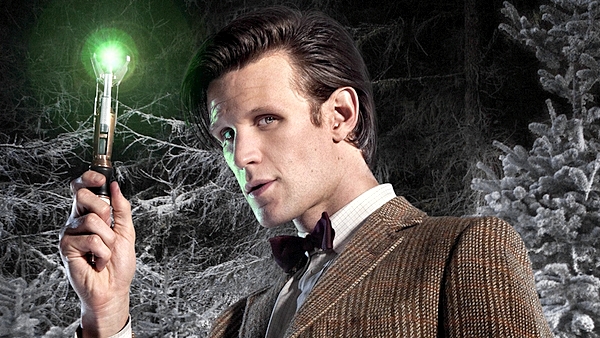
You really can't celebrate the birth of Jesus without a two-hearted immortal alien time traveler in a bow tie. Or, for the record, nutmeg.

Continue reading “The Doctor Who Christmas Special 2011: “The Doctor, the Widow, and the Wardrobe” – The Antiscribe Appraisal”

My Favorite Christmas Story of the Year

By Jonathan Morris, Antiscribe.com

I have to be honest; I’m just not a huge fan of Christmas anymore.  Sure, I know, there are a lot of people like me who decide to use every December as a chance to get snide, snarky, and cynical, to bemoan the commercialism or the often overly-manufactured good cheer that accompanies every Christmas season (or something like that).  But I have no problem with Christmas, or Hanukkah, or Kwanzaa, or Ramadan, or even the rampant consumerism that centers on all of them.  Well, maybe not on Ramadan, but you get the idea.  It’s just that Christmas, for people like me, is always a stark reminder of those in our lives who are missing.  For me and my family, that person is my Dad.

My father passed away over eight years ago, but as anyone who has ever lost a parent can tell you, when all the grieving is done, there’s still a void left behind that’s never really filled.  And at Christmas, when my admittedly somewhat dysfunctional family gets together to acknowledge, if not necessarily celebrate, the holiday, that void just seems ever more obvious.

So every holiday I’m given the choice: get depressed, or find some way to cheer myself up.  Needless to say, I choose the latter, and the way I choose to alleviate my sadness is the same way I choose every year: a mini-movie marathon of two singular 1980s comedies, the seasonally-appropriate A Christmas Story and the significantly less seasonal My Favorite Year.
Continue reading “My Favorite Christmas Story of the Year”

“Tinker Tailor Soldier Spy” – The Antiscribe Appraisal

By Jonathan Morris, Antiscribe.com

“A plague on both your houses!
‘Zounds, a dog, a rat, a mouse, a cat, to scratch a man to death!
A braggart, a rogue, a villain, that fights by the book of
arithmetic!
Why the devil came you between us?”
– William Shakespeare, Romeo and Juliet, Act 3,  Scene 1

It’s fair to say, I think, that we’ve all been trained by popular culture to think that there’s something thrilling, even sexy, about being a spy.  Foreign intrigues, exotic locales, elegant luxuries, strength of purpose, national pride, and beautiful women and/or men who represent the exemplars of their countries’ breeding; all these noble elements are what many of us of would think of when we hear the word “spy.”  But these things are not the trappings of a real spy, but a secret agent.  Secret agents are works of fictional fun and fantasy; engines of pleasure that assuage us with the notion that the conflicts of nations are just a game played out in the landscapes of someone’s imagination.  Spies, though, have always been a sordid, painful reality of the international sphere, and there’s very little that’s sexy about being a spy.  Real spies live in a world of pressure and paranoia that can be ugly, dark, and merciless, yet also technocratic, bureaucratic, and banal.  A spy who is especially good, especially lucky, or most often, especially ineffectual, might easily make it through their career with their life. It’s unlikely, though, that that life could ever be a happy one. Continue reading ““Tinker Tailor Soldier Spy” – The Antiscribe Appraisal”

Sherlock Holmes: His Best and Worst – The Antiscribe Overview

By Jonathan Morris, Antiscribe.com

With the sequel Sherlock Holmes: Game of Shadows being released on December 16, I thought I would take an always welcome trip down memory lane and look back at some the best and worst interpretations from cinema and television of Sir Arthur Conan Doyle’s famed creation, the world’s first and only consulting detective, Mr. Sherlock Holmes  If you’ve read my earlier post (written two years ago), you’d know that I’ve been a huge fan of the detective for my entire life; there are very few versions of the character that I haven’t seen, along with some I wish I hadn’t seen at all…

This list isn’t meant to be a complete overview of all things Sherlockian; the character is the most reprised in film history, and entire books have been written that have tried to provide an adequate survey of all the various popular incarnations of the character throughout its long history.  This list is simply an overview of my favorite adaptations, interpretations, and variations, represented as individual films, film series, and television shows, combined with similar productions that should perhaps otherwise be forgotten… Continue reading “Sherlock Holmes: His Best and Worst – The Antiscribe Overview”

On Sherlock Holmes

(Author’s note: This was written about two years ago as a sample blog that I never took past my Facebook page; I always thought it was pretty good, though, and with the sequel coming out next week, I thought I’d share it here now.)

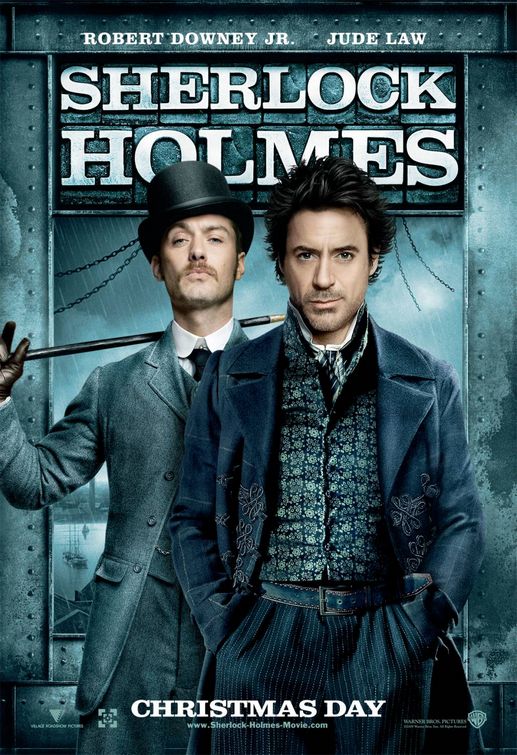
Earlier this week, with some trepidation, I went out to see the new Guy Ritchie/Robert Downey Jr. Sherlock Holmes movie. Said trepidation generally sprung from all the usual sources, though mainly from the concern that I was going to see yet another of my favorite pop culture icons torn asunder because of studio greed (see Van Helsing and The Mummy films for examples of what I mean. Or on second thought, don’t. Don’t EVER.). For I am a lifelong Holmes fan; my father would read me the Conan Doyle stories, and he and I would often spend Saturday nights watching the Jeremy Brett (still the best Holmes ever) series on Mystery! together. I myself read most of the stories before I was ten, and I even chose to name my first dog Toby, after the tracking dog Holmes used in The Sign of Four. 🙂 Continue reading “On Sherlock Holmes”

DC Animation’s “Batman: Year One” – The Antiscribe Analyzes

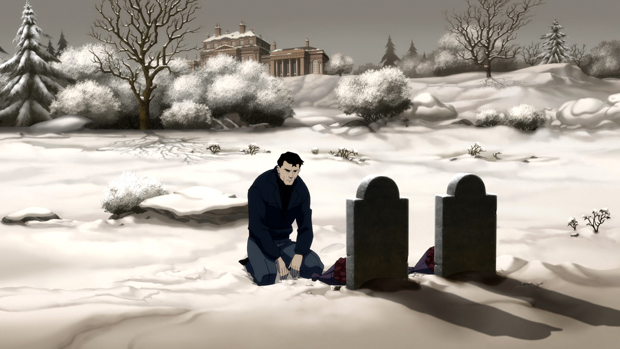
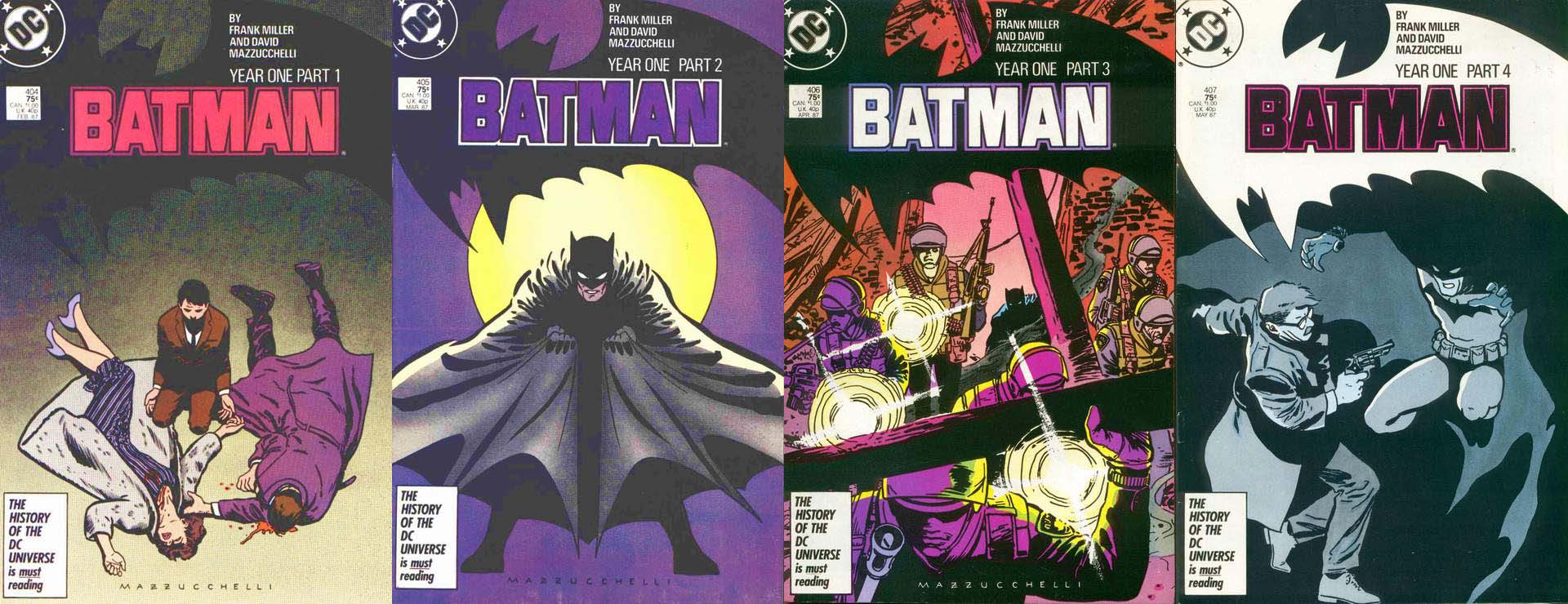
Even before the release of the original Batman: Year One almost twenty-five years ago, there were probably few origins in popular culture better known than the one for its eponymous character: a young boy and his parents go down the wrong alley one dark night, and after a chance encounter with a trigger happy mugger, the parents lay dead and the young boy is scarred forever. Decades later, that boy, after spending his life training to be the world’s greatest crime-fighter, grows to become the Batman: protector of Gotham City and arguably the greatest superhero of all time (and certainly the most culturally versatile). If the origin was well known 25 years ago, it’s positively burned into the popular imagination now, with the beginnings of Batman having been reiterated in different ways, through two major blockbuster films, three (or arguably four or five) animated series, a major video game release, and numerous other comic book reinterpretations. Yet through all of it, Batman: Year One, written by the legendary Frank Miller and illustrated by David Mazzucchelli, though not the first and hardly the last of Batman’s origin stories, still stands as perhaps the best and most resonant. Therefore it’s not surprising that DC Animated films and Warner Premiere would produce an animated adaptation of Batman: Year One; besides being entirely in keeping with their stated intention of reproducing and reinterpreting classic works of the DC Comics canon, the project would seem to be an almost commercial and creative slam dunk. Unfortunately, DC Animated’s Batman: Year One proves to be a fitting illustration of the difficulties that can sometimes transpire in transposing one medium to another; even two mediums that seem as inherently similar as comic books and animated film.

Continue reading “DC Animation’s “Batman: Year One” – The Antiscribe Analyzes”

Introduction to the Antiscribe.com #OWS Project

Recently, on our trip down to Philadelphia for an academic conference, my good friend and respected (if decidedly rakish) colleague Andrew Golledge and I visited the Philadelphia site of the Occupy Wall Street movement and came away with varied impressions and strong opinions over what we had seen there.  With Andrew having agreed to come aboard Antiscribe.com as a full-time contributor, we decided that a very cool introductory project would be for each of us to write our own thought piece about OWS and, in keeping with the intellectual focus of this website, channel our impressions of it through some facet of popular culture.  The two articles below, “#OWS for Vendetta” and “Radical Failure,” represent the culmination of this project.  I must say, as owner of this website, I’m damn proud of both our efforts and I’m honored to be able to present them each to you here.

I also want to take this opportunity to welcome Andrew to Antiscribe.com!  Andrew Golledge, whose site nickname is Don Manifesto, has been my trusted compadre and colleague for a few years now.  He’s also a brilliant scholar, terrific writer, and now budding amateur filmmaker with a distinctive, passionate perspective that equally compliments and contrasts my own.  If his work on this project is any indication, we’re all in for some excellent reading in the weeks and months to come.  (Just don’t tell him I said that…I have enough trouble with my own ego…)

Blog at WordPress.com.

Up ↑